Hadron Spectroscopy
Studying the internal dynamics of hadrons and their effective properties through coupled channel amplitude analyses using data from different decay- and production mechanisms.
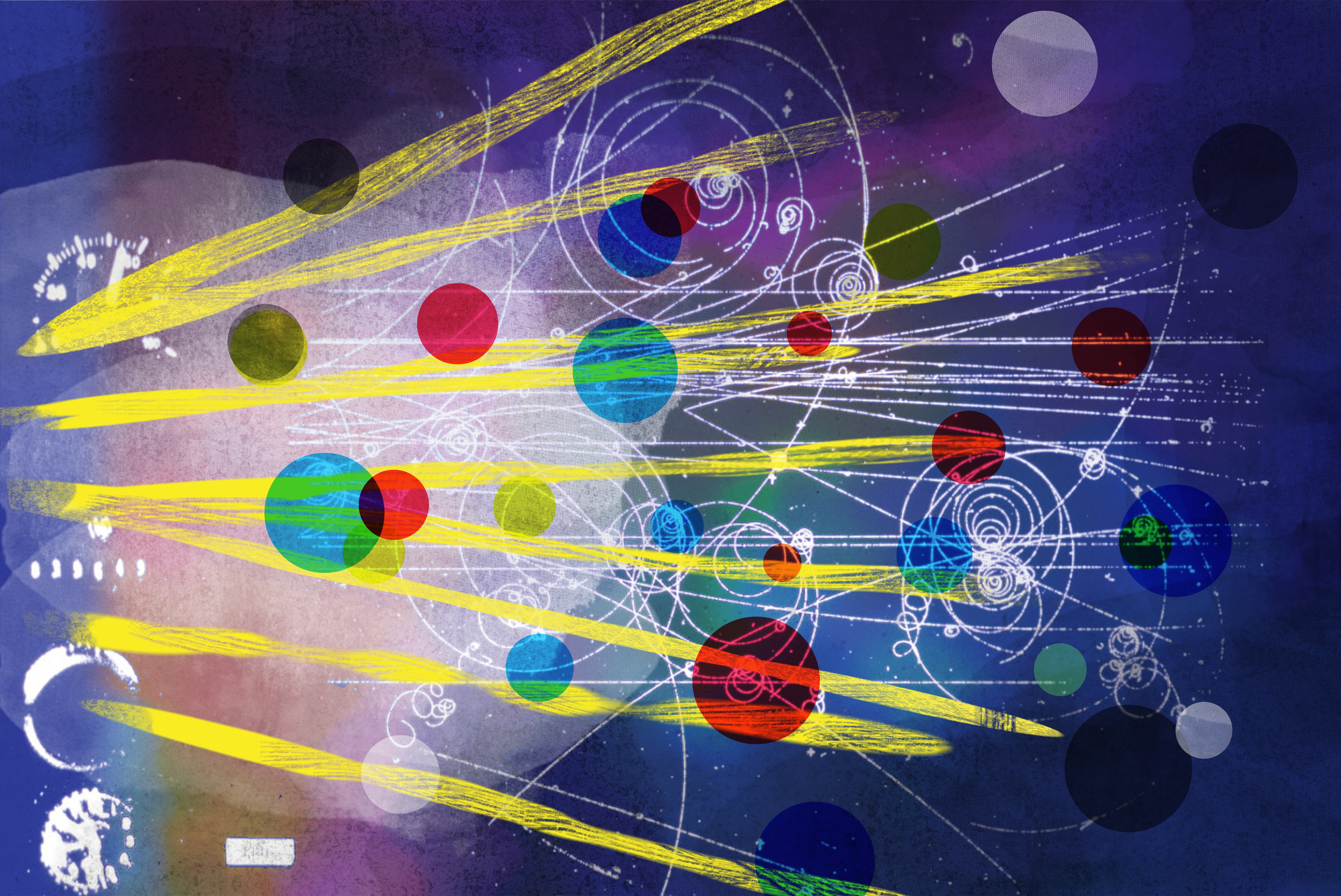
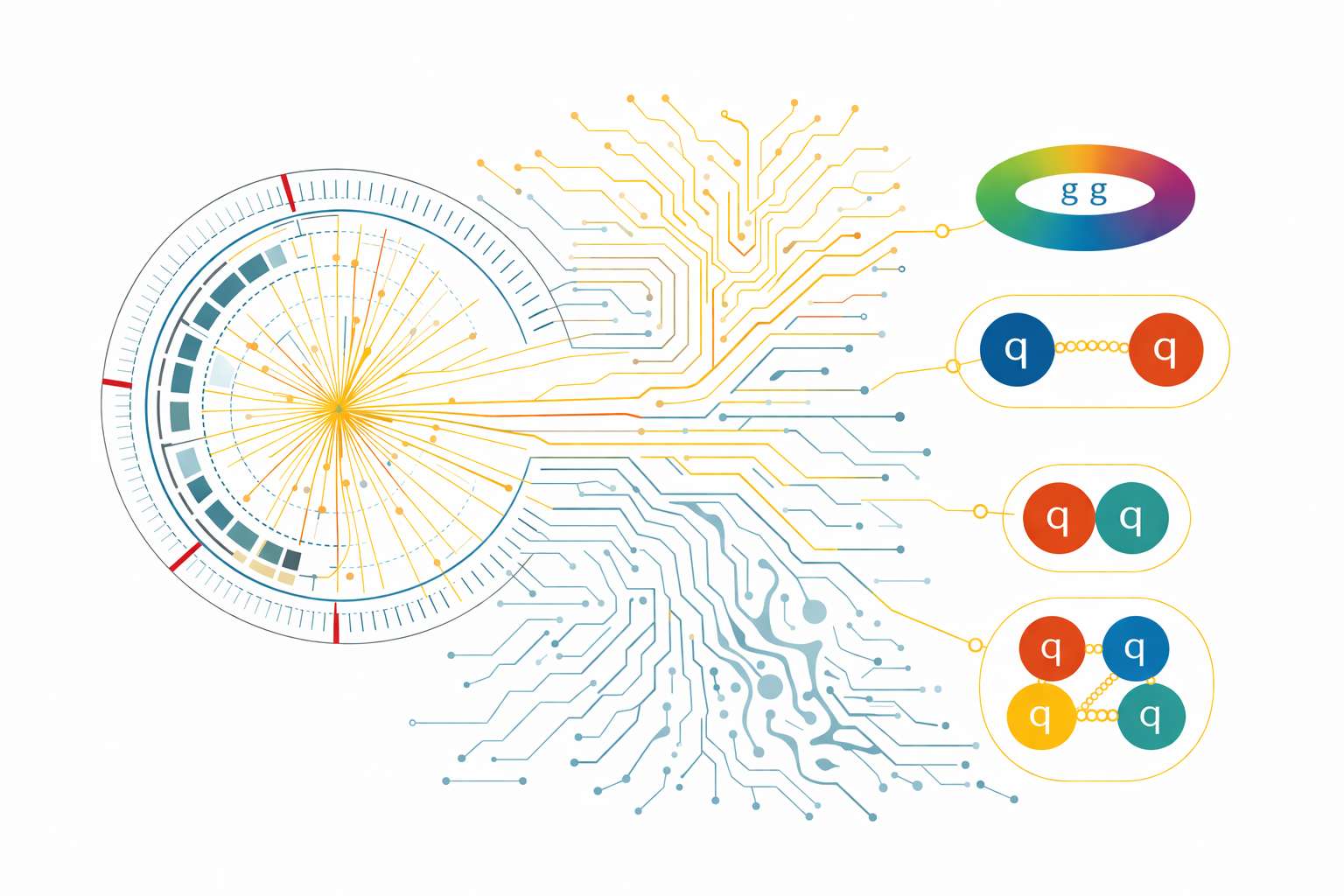
My interest lies in the fundamental part of the strong interaction where quarks and gluons behave non-perturbatively. This understanding of the strong interaction (QCD) is essential for the understanding of the mass creation by the strong interaction, which is e.g. responsible for ~90% of the mass of the proton. The recent appearance of QCD-exotic states with unusual configurations of quarks and gluons and their spectroscopy opens a new window to get a deeper experimental and theoretical understanding.
College of William and Mary — Department of Physics
I am interested in how quarks and gluons generate mass, which degrees of freedom determine the properties of hadrons, and how these manifest across theory and experiment. I want to understand the role of the strong interaction in fundamental questions such as the matter-antimatter asymmetry in the universe, as well as the structure and impact of exotic states. As a member of the GlueX, BESIII, INSIGHT, and PANDA collaborations, I actively contribute to detector operation, data taking, and analysis. I collaborate closely with experts in phenomenology, lattice QCD, and computer science to advance a unified understanding of the strong interaction in the non-perturbative regime, while developing innovative tools and models for current and next-generation experimental facilities.
Studying the internal dynamics of hadrons and their effective properties through coupled channel amplitude analyses using data from different decay- and production mechanisms.
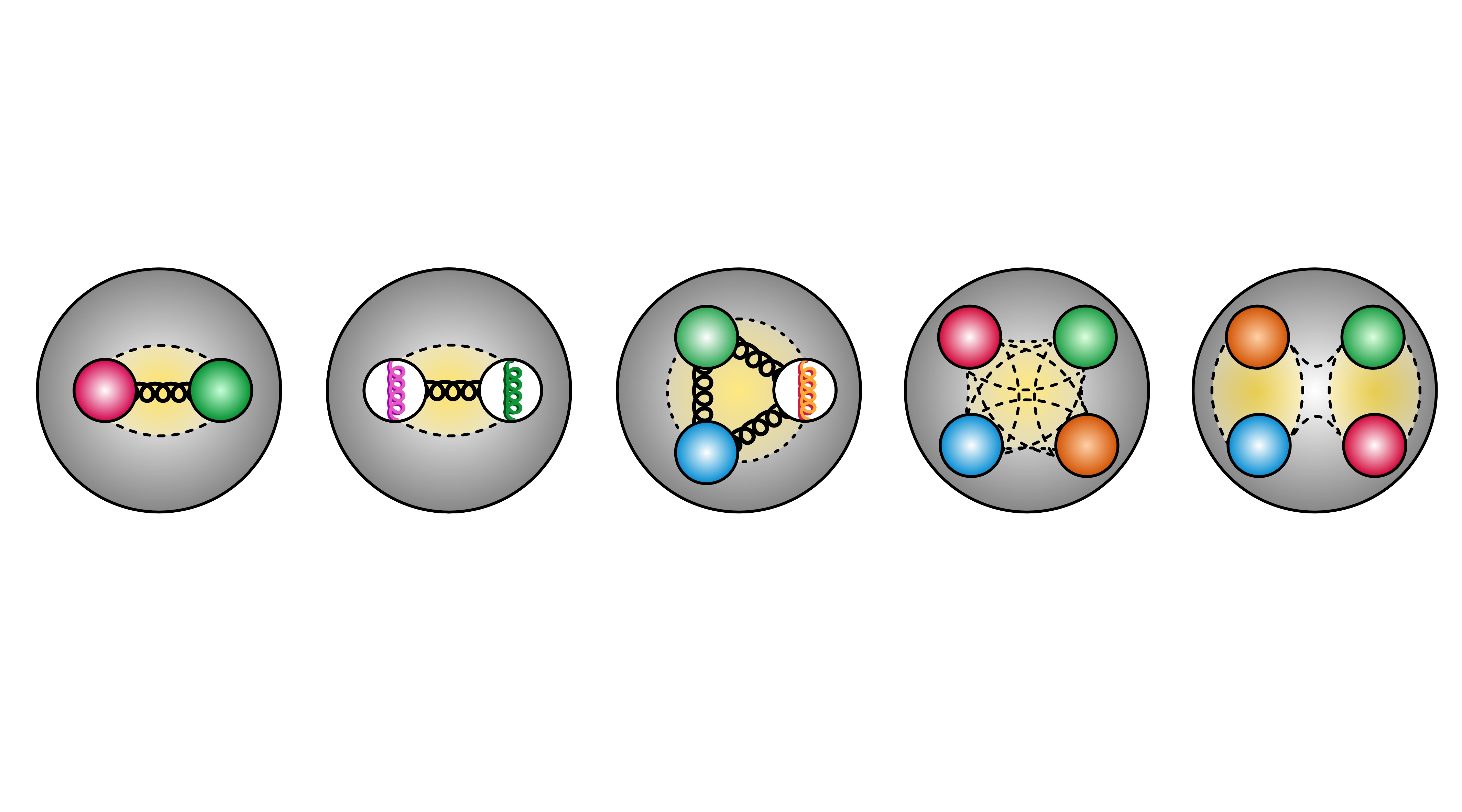
The interplay of quarks and gluons in exotic combinations can give us deeper insight into unknown parts of the strong interaction between quarks and gluons.
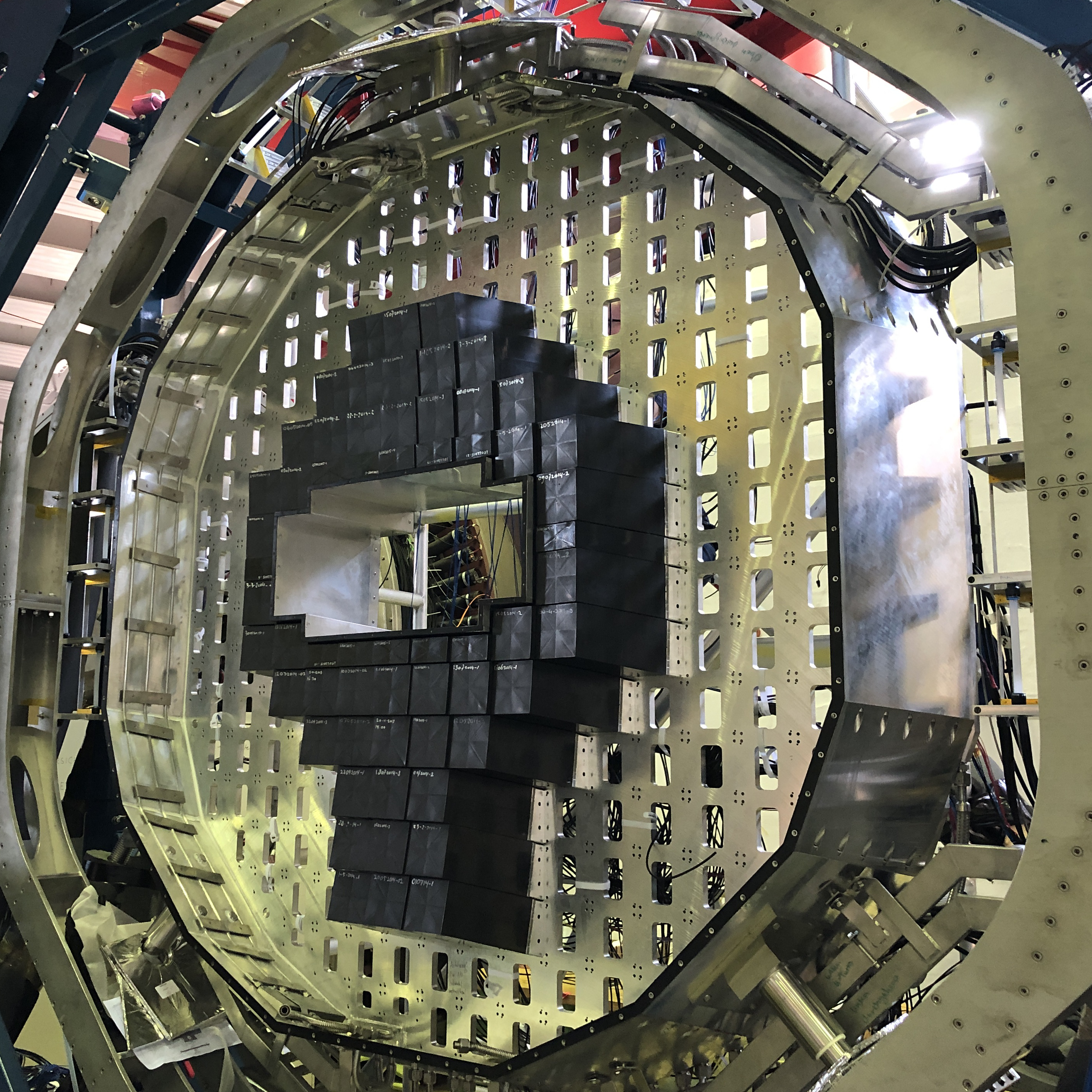
A not less important focus is on building hardware and analysis tools that support precision measurements in modern particle physics experiments. I was deeply involved in many aspects and components - from design, development, manufacturing and comiccioning - of the forward endcap calorimeter of the future PANDA experiment. As part of my more than 10 year long efforts, I contributed significantly to the design and realization of the cooling system, temperature monitoring and detector control system. I furthermore spend significant time on producing, calibrating and testing the needed 3856 crystal units. For this, lead tungstate crystals of roughly 4t of weight are cooled down to -25°C for ideal energye resolution and radiatation hardness. This imposes obvious and less obvious challenges on design and operation as well as quality assurance and safety measures. The forward endcap calorimeter will be used within the INSIGHT experiment at ELSA in Bonn as part of the excellence cluster Color meets Flavor until its intended usage at PANDA at FAIR.
Artificial intelligence is becoming a central driver of modern data analysis in experimental physics—from detector simulation and operation to event selection and interpretation. By leveraging AI, we aim to dramatically accelerate the analysis of the massive datasets expected in the coming years. A key example is the use of machine learning regularization techniques to suppress background in the search for rare processes. My research focuses on two main directions: the development of generative neural networks for fast, high-fidelity detector simulation, and advanced optimization strategies for high-dimensional amplitude analyses. Replacing computationally expensive, event-by-event particle propagation with AI-based generative surrogates enables orders-of-magnitude speedups, particularly for electromagnetic calorimeters such as those used in GlueX and BESIII. At the same time, large-scale, multidimensional analyses demand robust and efficient minimization tools. Traditional methods often struggle with slow convergence, sensitivity to initialization, and complex likelihood landscapes. To overcome these challenges, we develop novel optimization approaches inspired by algorithms used in AI network training, combining techniques such as automatic differentiation, ADAM, L-BFGS-B, and hybrid schemes that integrate global exploration with local refinement. These advances not only improve performance and reliability in large analyses but also make cutting-edge methods accessible within the time constraints of student research, while significantly reducing computational cost. Ultimately, this work supports coupled-channel analyses across multiple reactions, enabling deeper insights into particle interactions and the structure of hadronic matter—providing critical input for theoretical understanding.
I am always excited to work with curious young students.
Email: mkusner@wm.edu
Profiles: ORCID · Google Scholar